
Hello, Demo Garden followers!
I’m Abbey Draut, and I stepped into the role of Horticulture Agent for Food Crops in late 2023. Thank you for your patience as I got settled—last year was a whirlwind of learning, and the blog took a brief pause. But I’m excited to share that we’re back online and ready to grow!
I want to give a big shoutout to Rebecca McMahon, who launched this blog and kept it thriving for an incredible 13 years. Her passion and dedication are evident in every post—be sure to explore the archives to see the amazing journey she and the Master Gardeners took the garden on over the years.
I’m honored to continue the tradition of providing Sedgwick County residents with creative ideas and research-based gardening practices that you can try at home. Now, let’s take a look at what the Master Gardeners have planned for the garden this year!
Entry Beds with Big Cucurbits & Roots
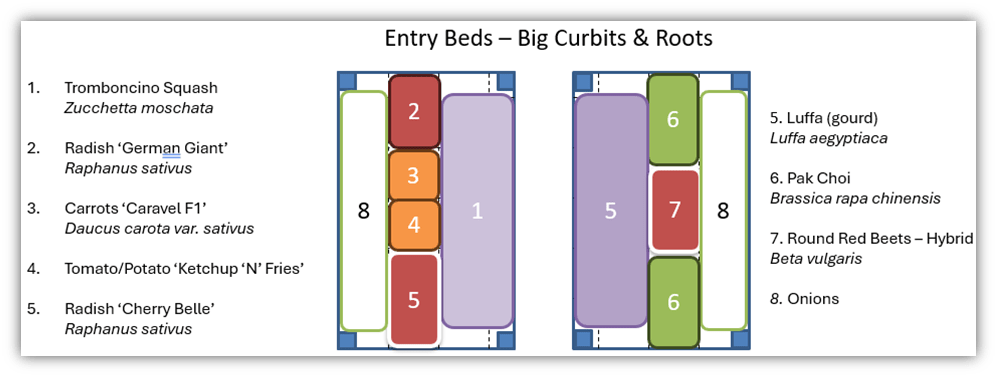
This year, keep an eye out for unique squash varieties like Tromboncino and interesting gourds like Loofa in the entry beds. Our plan is to train the vines to climb the trellis, allowing the fruit to grow down through the lattice for a dangly display.
Bed 2 – Victory Garden for the 21st century

A “Victory Garden” comes from a World War I & II era, where people were encouraged to have home vegetable gardens to ensure adequate food supplies for civilians, troops, and to boost moral.
This victory garden for the 21st century is a little different and focuses on drought-tolerant varieties to ensure bountiful harvests with less water.
Bed 2 – Mexican Garden
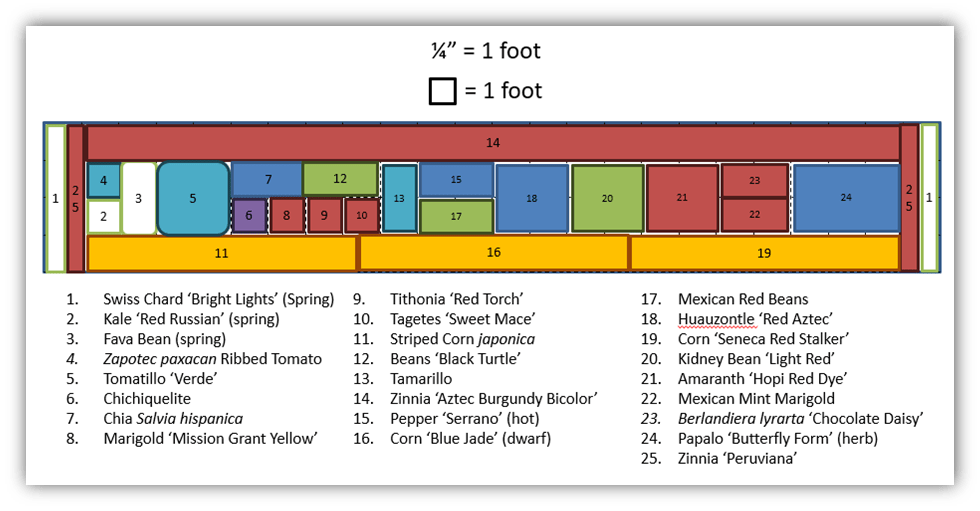
Last year, Bed 2 showed no signs of nematode activity, and we’re hopeful that trend continues this season.
This year, we’re planting some tomatoes in the bed, which will serve as our test crop for nematode presence.
The theme for Bed 2 is Mexican Garden Vegetables, featuring a selection of heat-tolerant vegetables with a mixture of heat-tolerant annual flowers such as Marigold and Zinnia.
Bed 3 – Plants to dye for
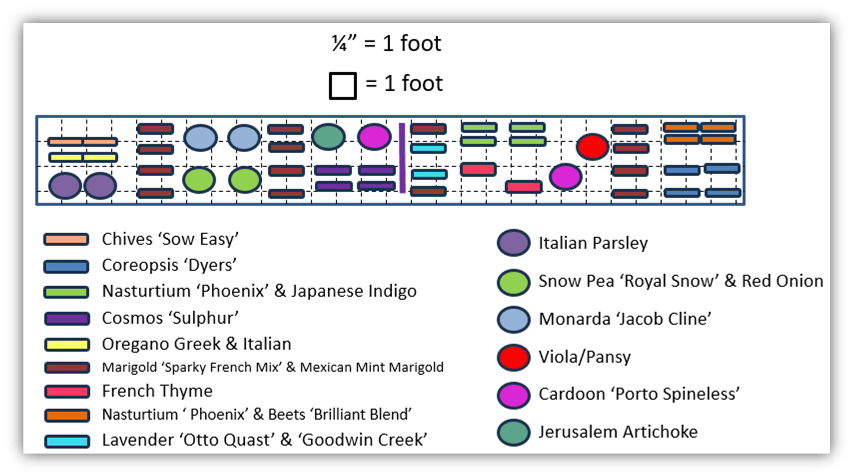
For centuries, botanical dyes have been used to color paper, fabric, and other materials. One ancient method, originating in Japan, is called Tataki-zome—which means “hammered dye” or “flower pounding.” This technique involves pounding flowers and foliage onto paper or natural fabric to transfer their colors.
The plants in this bed were carefully selected for their leaves, blooms, roots, and historical significance in natural dyeing. For instance, the fresh leaves of Japanese indigo (Persicaria tinctoria) can create a striking blue-green hue on natural fabrics—and on your hands if you forget gloves!
Bed 4 – totally tomatoes
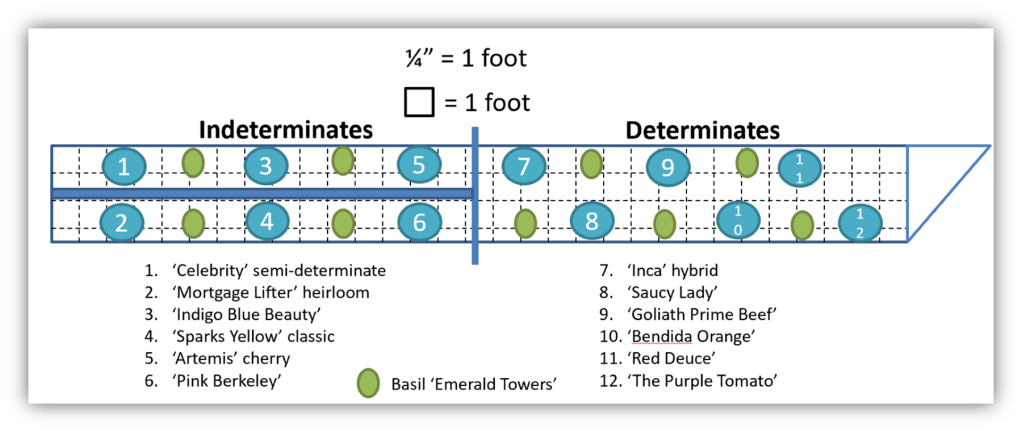
Due to nematodes in several beds in the Demonstration Garden, the tomato variety bed continues to rotate.
This bed is focused on heat and drought-tolerant cultivars of indeterminate and determinate tomatoes.
A unique tomato to look out for this year is ‘The Purple Tomato’ by Norfolk Healthy Produce – a genetically modified tomato with Snapdragon DNA that gives the tomato a deep purple color.
Bed 5 – New & interesting varieties
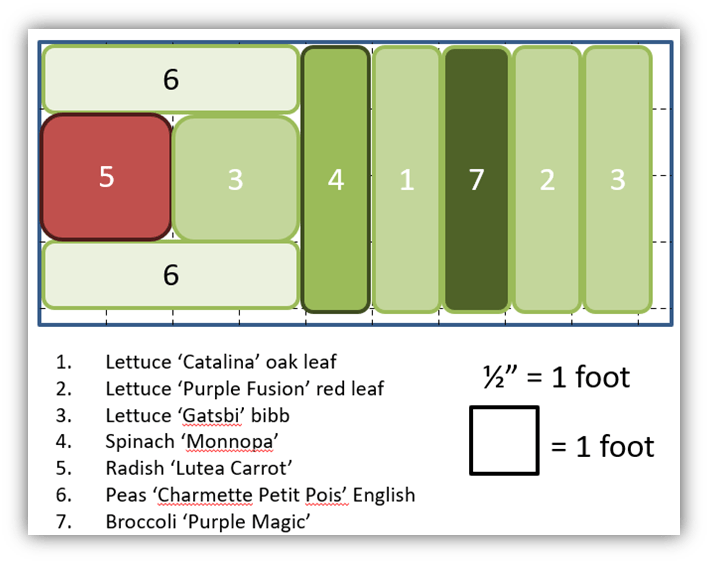
Bed 5 returns for another season as the New and Interesting Variety bed, showcasing a diverse collection of standout selections.
This year’s focus includes:
· Drought tolerance, with resilient crops designed to thrive in dry conditions.
· Enhanced flavor, featuring varieties like ‘Monnopa’ spinach, known for its sweeter taste thanks to low oxalic acid content.
· Garden color, with striking additions like the dark-leaf lettuce ‘Purple Fusion’
· Unconventional looks and flavors, highlighted by the uniquely shaped and flavored radish ‘Lutea Carrot’.
· Distinctive varieties, such as the petite pea ‘Charmette Petit Pois’ and the vibrant ‘Purple Magic’ broccoli.
Bed 6 – the mint “Cousins”
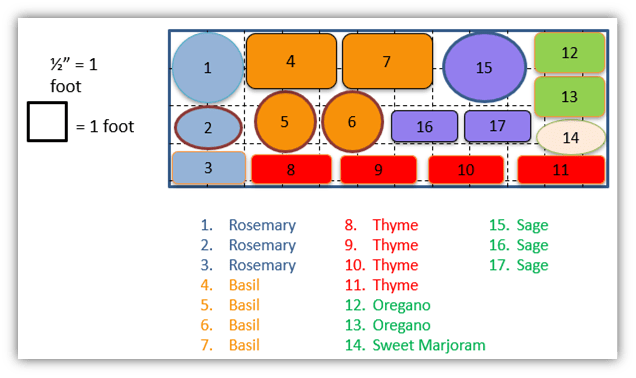
Bed 6 is still in the works as the Master Gardeners curate Rosemary, Basil, Thyme, and Sage cultivars that complement the mint assortment in the containers adjacent to the bed. Look out for an update on this bed soon!
Bed 7 – Victory Garden for the 21st century (addition)

The Grape ‘Himrod’ was removed due to age and illness. A new variety will be planted in the fall of 2025.
In the meantime, we are using this bed to grow more food.
Did you know all of the food produced in the Demonstration Garden is donated to the Plant a Row program, then processed and redistributed throughout our community through the non-profit ICT Food Rescue?
The Master Gardeners and Segwick County residents have been promoting and donating to the Plant a Row Program for 25 years! In that time, over a million pounds of food have been donated and given to those in need within our community.
Check out more about this program on our Sedgwick County Local Foods website.
Bed 8 – Currant and gooseberry

In Bed 8, we chose to try something a little different in 2024—currants and gooseberries. These compact, cold-hardy shrubs are not only beautiful, but they also bring unique flavors and textures to the edible landscape. We’re excited to see how they perform and to share what we learn along the way!
‘Pink Champagne’ Currant
We selected ‘Pink Champagne’ for its soft, blush-colored fruit that ripens in July. The berries are less tart than other currants, making them great for jams, jellies, and pies. In the spring, it puts on a subtle show with yellow-green flowers, and by summer, it’s covered in delicate pink berries. It’s compact—growing just 3 to 5 feet tall—and can handle our Kansas winters, tolerating temperatures as low as –40°F. Plus, it’s easy to grow in either full sun or partial shade.
‘Tixia’ Gooseberry
Right next to it, we planted ‘Tixia’ gooseberry, a variety known for its large, bright red berries with a sweet-tart flavor. These are delicious fresh off the plant—if you can get to them before the birds do! What we like about Tixia is that it’s a little easier to pick than other gooseberries, thanks to its semi-thornless branches (though we still recommend wearing gloves). It’s also very productive, mildew resistant, and just as hardy as the currant.
We’re looking forward to watching these plants grow and seeing how they do in our climate.
Bed 9 – ‘Chicago Hardy’ Fig

We’re excited to see just how hardy this fig really is. Planted in 2024, it began as a scrappy little plant—just a single branch with three leaves, barely resembling a tree. That first spring was a challenge: we struggled to keep it staked and protected from the relentless wind. Despite several failed staking attempts, it held on and surprised us by bursting into a vigorous, multi-branched shrub by mid-summer.
While it produced plenty of fruit, the figs only reached about half an inch in size and never ripened. We suspect the compost we used may have contained herbicide residue that affected fruit development. Still, the plant survived and grew impressively, and we’re hopeful that this year it will bounce back even stronger—and maybe reward us with ripe, edible figs!
Bed 10 – ‘Contender’ Peach Tree

In Bed 10, we’ve chosen the long-standing peach variety ‘Contender,’ developed in 1988. One of the challenges of the Demo Garden is the limited space for planting multiple fruit trees for cross-pollination. Fortunately, ‘Contender’ is self-fertile, meaning it doesn’t require another tree for pollination, which works perfectly in our small space. However, in a home garden where space permits, planting more than one tree could help boost fruit production.
Planted in 2024, the ‘Contender’ peach tree established itself well in the raised bed. This spring, I watched the first blossoms emerge in March, only to see them wither after the unexpected early April freeze. Despite this setback, I’m hopeful we’ll still get a few peaches this year.
Stay Tuned…
…For in-depth updates that will dive into specific varieties, gardening techniques, and the educational opportunities unfolding in each of the beds mentioned in this post.
-Abbey

 The Demo Garden Blog
Leave a reply to Ken Janzen Cancel reply