
We planted some sweet potatoes in one of the ornamental gardens on our ground – both ornamentals and regular edible types of sweet potatoes. Specifically, they were in our EarthKind Soils demo area, where they were planted in a clay soil that had been amended with expanded shale and compost. The beds were minimally watered all summer, and there were times when the plants were kind of wilted.You might think that would mean that we ended up with small sweet potatoes, right? Wrong!
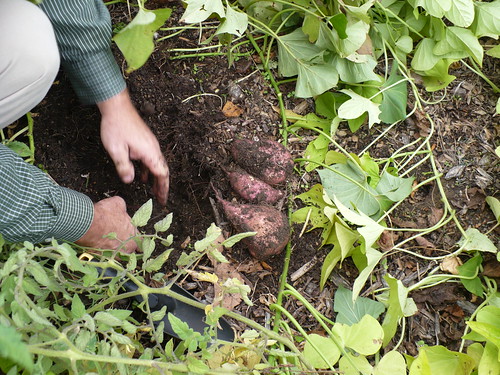 Okay, so these aren’t that big. They are nice potatoes though!
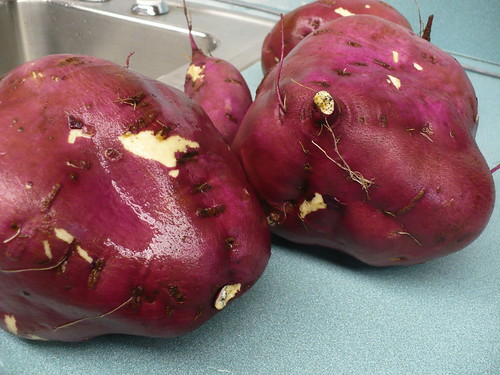 These are bigger! The variety is some type of Japanese sweet potato that has a bright purple/pink skin and a very pale flesh color. I was kind of surprised at how round-shaped they are, instead of the more oblong shape we expect to see.
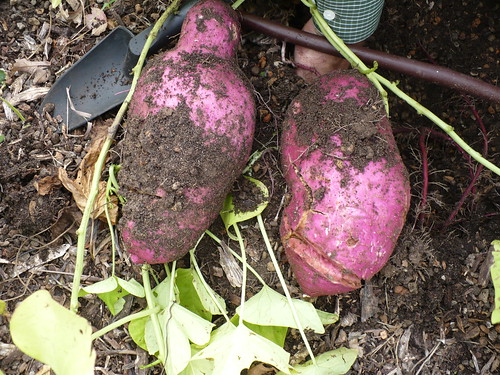 We also pulled out one of the lime green ornamental sweet potato vines and found these two potatoes! They were badly cracked, but still pretty impressive. Generally, the sweet potatoes grown under ornamental vines are edible…but not very tasty. They were bred for the ornamental characteristics, not tasty roots.
When harvesting sweet potatoes, it is important to let them air dry for a couple hours before you do anything with them to help the skins heal a bit. You can see in a couple of the pictures above that the skins were damaged when we tried to wash them right away.
Sweet potatoes also need to be cured for a couple weeks to improve their storage life and eating quality. Curing helps convert more of the starch to sugar, so they taste sweeter. They should be cured at temperatures of 80-90 degrees with high humidity. You may not have a spot that easily meets those conditions, so you can store them in the warmest spot you have with the potatoes in a perforated plastic bag to keep the humidity up. Under those less-ideal conditions, you might need to cure them for 2-3 weeks. After the curing stage, they can be stored in a cool, dry place until you are ready to use them.


 The Demo Garden Blog
Leave a reply to Yui Cancel reply