
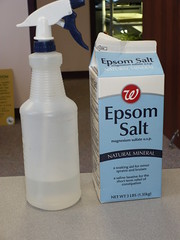
 Bob, the other horticulture agent here, brought me a box of Epsom salt this morning for our ailing tomato plants. The box helpfully comes with instructions on using it for sore feet or as a laxative (!), but not for tomatoes. A quick Google search led me to an article about using Epsom salt as a foliar feeder, rather than just mixing it into the soil. Apparently it works more quickly that way. (A foliar feeder means that I can spray a solution on the leaves, and it will be absorbed that way.)
The recommended rate was 1 tablespoon of Epsom salt per cup of water. I dug up a spray bottle and mixed up my solution. (Quick side note: Epsom salt is actually magnesium sulfate. Magnesium and sulfur combined into a “salt” form. Salts, particularly sulfur can have a nasty side effect of scorching or burning plants in hot weather. This could be interesting.)
Anyway, the worst case scenario is that the spray could scorch the leaves, probably putting an end to our tomato experiment for this year. The best case scenario is that the spray results in some improvement of symptoms on the plants. Of course, between that would be no visible effects of either kind. No harm done, but no problem solved either.
I would expect to see some change in a couple of days. I’ll keep you posted!
P.S. – I also sent 2 plants to the K-State Plant Pathology Diagnostic Clinic. We don’t think they’ll find anything, but who knows!


 The Demo Garden Blog
Leave a reply to Windy Week « The Demo Garden Blog Cancel reply