
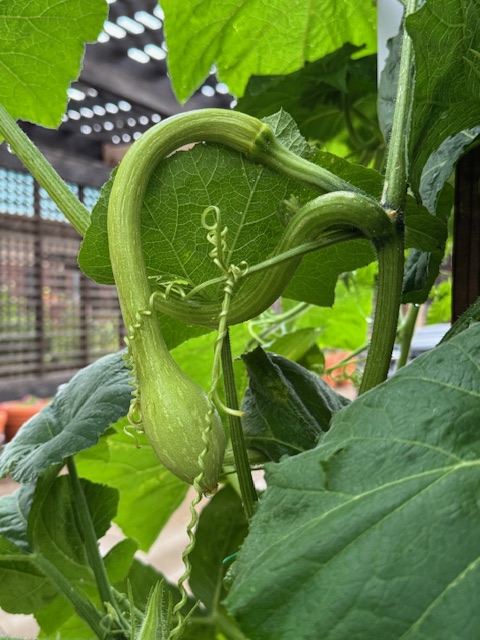
The plants selected for the Demo Garden Entry Beds included unique squash varieties, such as a favorite of our committee chairperson, the Tromboncino Squash (Cucurbita moschata). Known also as climbing zucchini, the tromboncino is a member of the Cucurbitaceae family that, when trellised, can grow several feet long at maturity.
Like zucchini squash, the blossoms of the tromboncino can be prepared and eaten. Tromboncino can also be harvested when small and young, and the flavor is mild and sweet. At this stage, the squash is about 10 inches long, light green in color, with a bulb-shaped base.
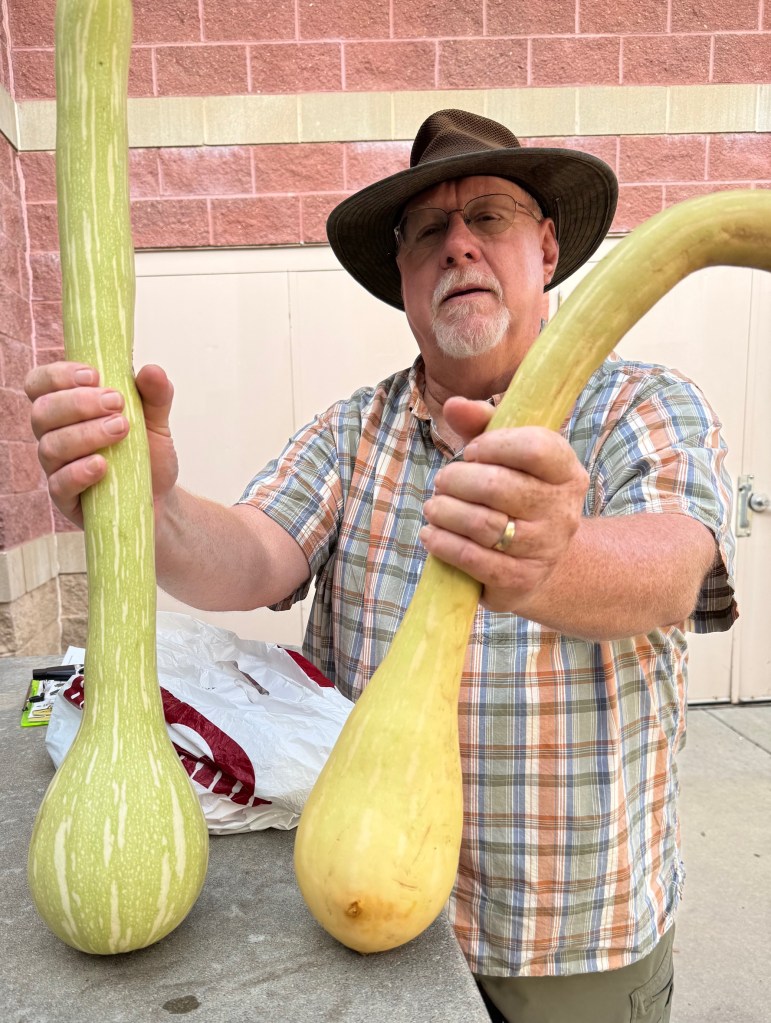
If left to mature, the tromboncino will grow much longer, the skin will thicken and transition to a tan color, like a long-neck butternut squash1.
Once established, tromboncino squash are generally resistant to vine borers and cucumber beetles2. Unfortunately, our squash varieties in the Demo Garden were not resistant to squash bugs.
Squash Bug
If you’ve grown squash in Kansas, it is likely that you are familiar with the squash bug. These garden visitors overwinter as unmated adults and are active in late spring. Once mated, females deposit eggs in clusters on the underside of squash leaves3.


More on Squash
Chapters 10, 12 and 15 of the Kansas Garden Guide have excellent information about summer and winter squash including common concerns4. Hint: also check the information under cucurbits (pumpkin, squash, melon, watermelon, cucumber)4.
The following section describes a common fungus seen in cucurbits, please refer to the Kansas Garden Guide4 for more squash issues.
Powdery Mildew

As temperatures rise in late summer, powdery mildew fungus is another concern for squash. Powdery mildew is one of the most easily recognized fungal diseases; observed as dusty spots or patches of white-to-gray growth on leaves, stems, or fruit5.
Given our recently warm and humid conditions, powdery mildew (Golovinomyces cichoracearum and Podosphaera xanthii) spores may already be present in our squash6. Monitoring and management considerations include managing the garden to reduce humidity; use drip irrigation and water in the morning to allow plants to dry, reduce overcrowding to increase airflow, and check older leaves for signs of the fungus; since powdery mildew overwinters in plant debris, remove and destroy affected plant material4,5.
Other Demo Garden Visitors
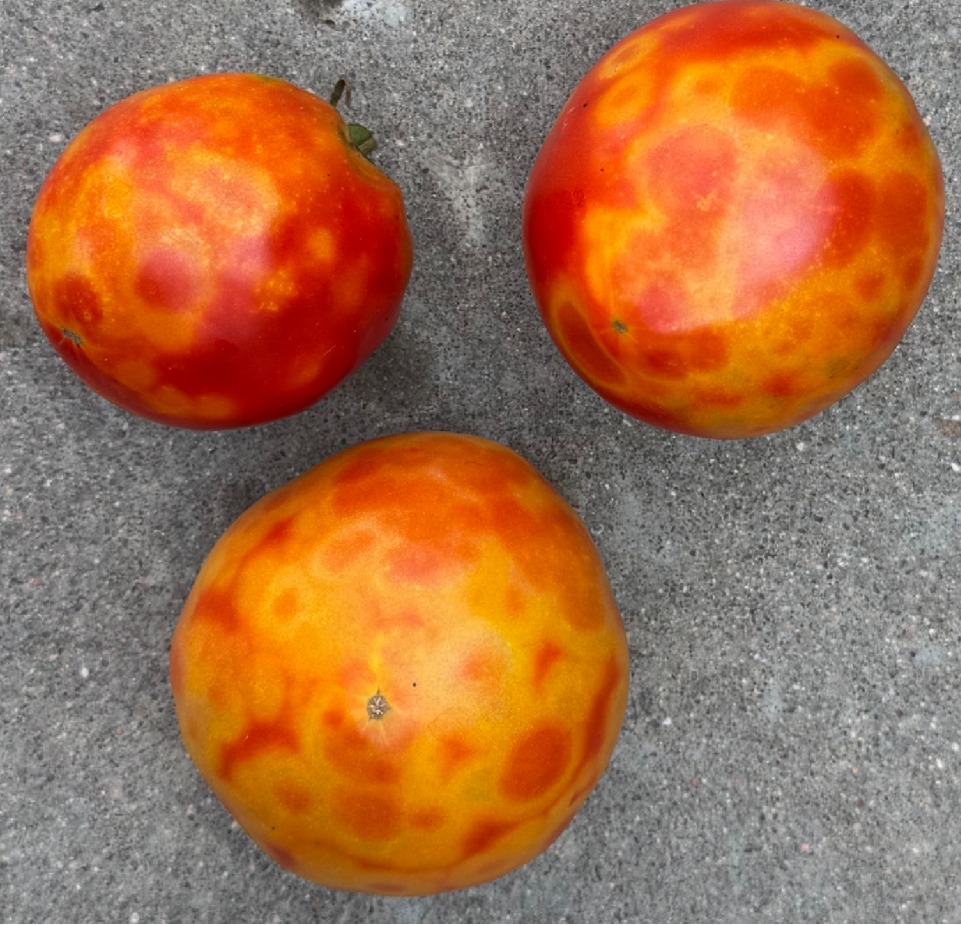
Our tomato harvest continues and we’re experiencing discoloration on some tomatoes. Last year, we were visited by the tomato spotted wilt virus (TSWV) and we are seeing evidence of it again this year. The presence of bright yellow, bullseye-like rings on mature tomatoes is a diagnostic feature of tomato spotted wilt virus7-9. While the strange-looking fruit are safe to eat, it is important to reduce the spread of the virus, by removing affected plants and increase sanitation measures with garden tools8. Control of insects, especially thrips, also helps to reduce spread of the virus9.
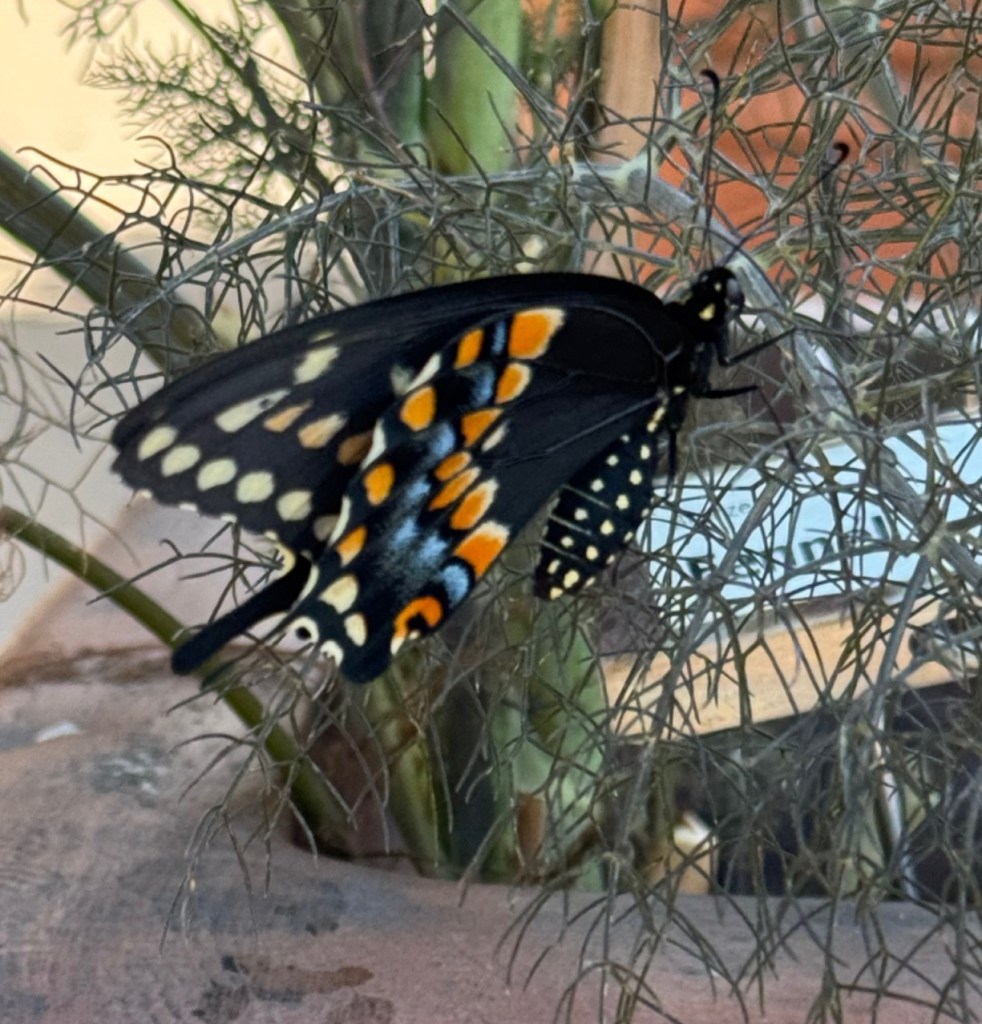
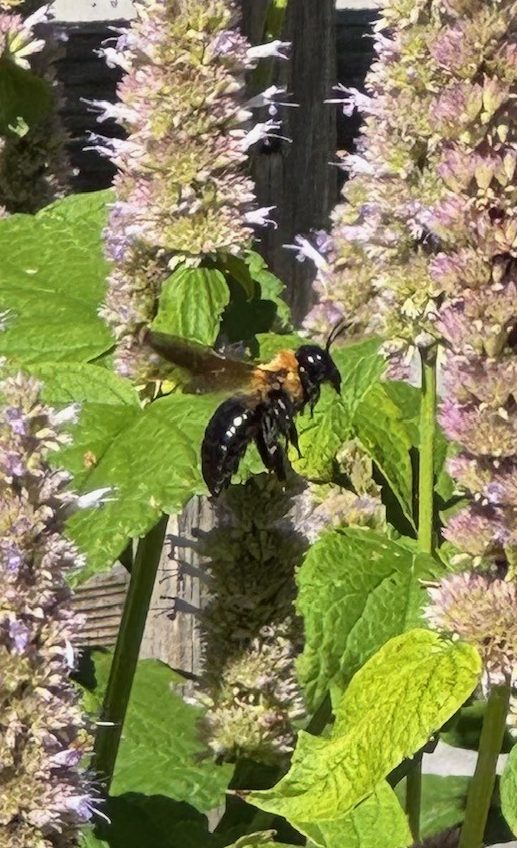
The Demo Garden has welcomed other visitors this year, as captured in the following images.


References
- Tromboncino Summer Squash. (n.d.). Southern Exposure Seed Exchange, accessed on August 5, 2025 at: https://www.southernexposure.com/products/tromboncino-summer-squash
- Squash, Pumpkin, & Zucchini Growing Guide. (n.d.). Southern Exposure Seed Exchange, accessed on August 5, 2025 at: https://www.southernexposure.com/squash-pumpkin-zucchini-growing-guide/#species-guide
- Cloyd, R.A., & Nechols, J.R. (2016). Home and Horticultural Pests: Squash Bug. K-State Research and Extension, Kansas State University, accessed August 6, 2025 at: https://bookstore.ksre.ksu.edu/pubs/squash-bug-home-and-horticultural-pests_MF3308.pdf
- McMahon, R., Cloyd, R., et al. (2023). Kansas Garden Guide (pp. 186-188, 195). K-State Research and Extension, Kansas State University, accessed July 19, 2025 at: https://bookstore.ksre.ksu.edu/pubs/kansas-garden-guide_S51.pdf
- Webb, C. (2019). Keep an Eye Out for Powdery Mildew in Your Landscape… K-State Turf and Landscape Blog, Kansas State University, accessed August 6, 2025 at: https://blogs.k-state.edu/turf/keep-an-eye-out-for-powdery-mildew-in-your-landscape
- Pest Advisories: Squash Bugs, Powdery Mildew, and Wilt Caused by Soilborne Pathogens. (2024). Utah State University Extension, Utah State University, accessed August 6, 2025 at: https://pestadvisories.usu.edu/2024/07/15/squashbugs-mildew-wilts
- Kennelly, M. (2007). Wilt, Nematode, and Virus Diseases. K-State Research and Extension, Kansas State University, accessed August 6, 2025 at: https://bookstore.ksre.ksu.edu/pubs/wilt-nematode-and-virus-diseases-of-tomato_L723.pdf
- Tomato Spotted Wilt Virus. (2023). K-State Research and Extension, Kansas State University, accessed August 6, 2025 at: https://hnr.k-state.edu/extension/horticulture-resource-center/common-pest-problems/documents/Tomato%20Spotted%20Wilt%20Virus.pdf
- Cloyd, R.A. (2025). Insect and Mite Pests of Greenhouse Grown Tomatoes. K-State Research and Extension, Kansas State University, accessed August 6, 2025 at: https://bookstore.ksre.ksu.edu/download/insect-and-mite-pests-of-greenhouse-grown-tomatoes_MF3705
Contributing Writer: Victoria Mosack, Sedgwick County Extension Master Gardener

Harvesting Continues with Plant a Row & ICT Food Rescue
As a reminder: Produce from our vegetable harvest is donated to the Sedgwick County Plant a Row (PAR) program and distributed by ICT Food Rescue. There’s more information about PAR and harvest drop-off locations at the Sedgwick County Local Foods website, please share your harvest, if you can.
Thanks for joining us on the Demo Garden Blog! Watch for more posts, as we enter the fall season…
 The Demo Garden Blog
Leave a comment