
Demo Garden Bed #3
Natural Dyes
Sources of natural dyes are found everywhere. Botanical dyes from roots, foliage, nuts, berries, flowers, wood, and fungi were historically used to dye fabrics, leather, and paper. Also, the pigments in food coloring and in paint have been influenced by plant-based dyes. Once the mainstay of textiles coloring, botanical and other natural dyes were largely replaced by mass-produced chemical dyes in the mid-1800s. This century, however, dye gardens are gaining popularity among crafters, artists, and gardeners.

Dye Gardens
Planning dye gardens involves selecting plants that are useful in transferring color onto natural materials, such as cotton fabric and watercolor paper. While details about natural dyes are available from K-State resources and elsewhere1-4 (see References), this post will focus on the plants selected for the ‘Plants to Dye For’ Garden and their use in flower pounding.

Plants to Dye For
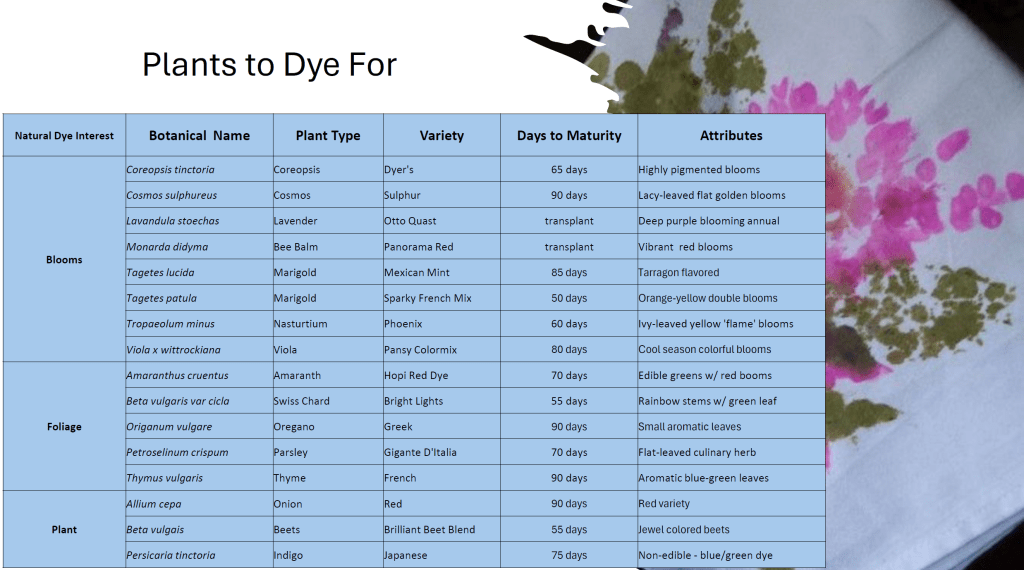
Plants selected for this dye garden include flowers such as bee balm, coreopsis, cosmos, lavender, nasturtium, pansies/violas, and marigolds. Plants chosen for their foliage include Hopi red dye amaranth, Swiss chard, and herbs (parsley, thyme, oregano). Japanese indigo, onions, and beets were included for the intense color imparted to whole pieces of fabric.
The next page shows details of these selected plants from our dye garden.
Flower Pounding
Flower pounding comes from an ancient Japanese technique called Tataki-zome, meaning “hammering dye”, where flowers and foliage are used to beat color onto paper and natural fabric. The process can be simple or involved, depending on the planned uses of the finished product.
Keeping it Simple
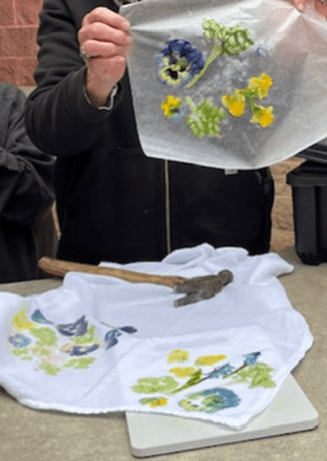
The art of flower pounding is described online5-7 (see References). Ultimately, the technique involves placing leaves and flowers facing the surface of natural paper or fabric, covering the plant parts with another piece of paper and hammering them until the colors transfer.
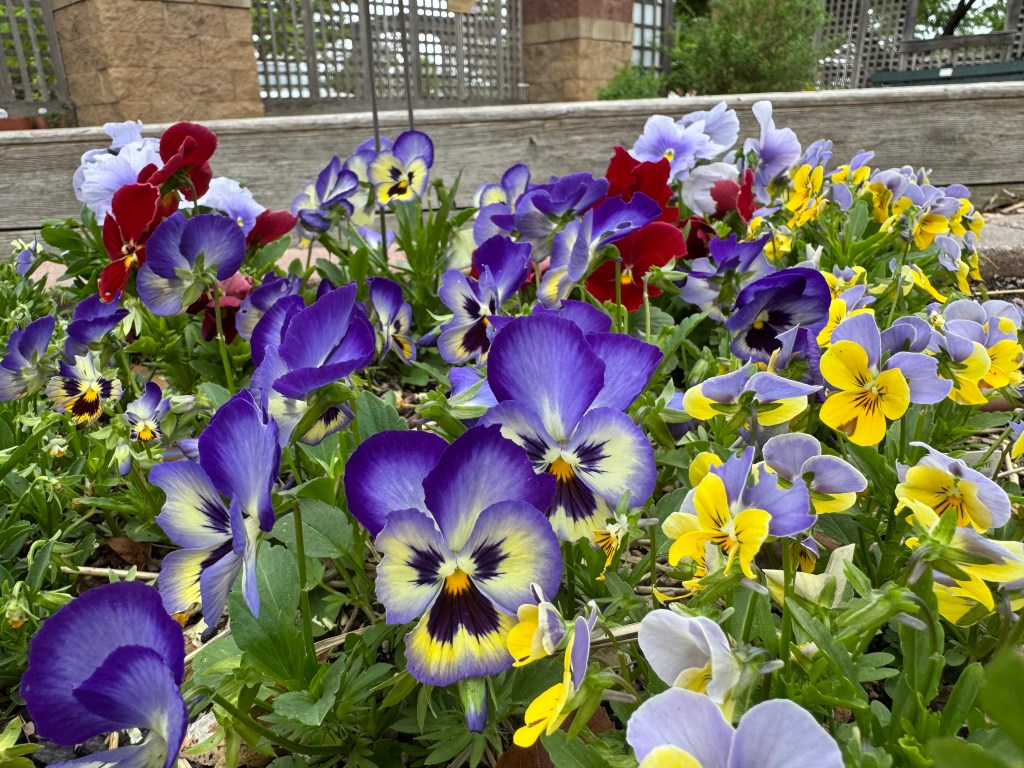
The next photos show the process with selected greens and a mix of viola/pansies from the Demo Garden.

Have fun as you give it a try!
References
- Doty, K., Green, D. N., & Haar, S. (2024). Natural Dyes in the United States: An Exploration of Natural Dye Use Through the Lens of the Circuit of Style-Fashion-Dress. Clothing and Textiles Research Journal, 42(4), 310-324. https://doi.org/10.1177/0887302X241229222
- Kingery-Page, K. Natural dyes from meadow natives with Sherry Haar (July 9, 2015). The Meadow: Natural Dyes – Kansas State University, accessed June 13, 2025 at: https://blogs.k-state.edu/meadow/category/natural-dyes/
- Merdan, N., Eyupoglu, S., & Nayci Duman, M. (2017). Ecological and sustainable natural dyes. In S.S. Muthu (Ed.) Textiles and Clothing Sustainability (pp. 1-41), Springer, accessed June 14, 2025 at: https://www.researchgate.net/publication/306035547_Ecological_and_Sustainable_Natural_Dyes
- Shaffer, S., & Musgrove, T. (August 2, 2024). Art and horticulture merge to create natural dye garden at UK. Research News – University of Kentucky, accessed June 13, 2024 at: https://research.uky.edu/news/art-and-horticulture-merge-create-natural-dye-garden-uk
- Topp, C., & Reyes, M. (2024). Flower pounding on fabric. Garden Gate, accessed October 23, 2024 at: https://www.gardengatemagazine.com/articles/diy-projects/garden-crafts/flower-pounding-on-fabric
- Chairez, C. (2024). gARTening: Pound flower art. Fact Sheet: IFAS Extension Orange County Blog – University of Florida, accessed June 14, 2025 at: https://blogs.ifas.ufl.edu/orangeco/files/2024/03/Pound-Flower-Art-Fact-Sheet.pdf
- Flower pounding! (n.d.). Virginia 4-H Healthy Living @ Home Activity, Virginia State University – Virginia Cooperative Extension, accessed June 14, 2025 at: https://ext.vt.edu/content/dam/ext_vt_edu/topics/4h-youth/at-home/4-H%20at%20home%20Flower%20Pounding.pdf
Contributing Writer: Victoria Mosack, Sedgwick County Extension Master Gardener
In the meantime:
Harvesting Continues with Plant a Row & ICT Food Rescue
Produce from our Demo Garden vegetable harvest is donated to the Sedgwick County Plant a Row (PAR) program and distributed by ICT Food Rescue. There’s more information about PAR and harvest drop-off locations at the Sedgwick County Local Foods website, please take a look.
Thanks for joining us in the Demo Garden Blog!
More posts coming soon…
 The Demo Garden Blog
Leave a comment